The origin film: a father, a piece of land, and the arrowheads that decided it.
The Ranch at Camp Ka Hui 'Ana
An Air Force commander inherited land his father never set foot on, found arrowheads in the sand, and kept it. Three years after launch, his hunts were booked two seasons out at up to $16,500.
Booked in advance, at trophy hunt pricing up to $16,500 for three days on the ranch
His father had built a telephone company in Texas and bought land across the state he never set foot on. The son spent 35 years in the Air Force, a commander with postings in Hawaii and Guam, and when his father passed he was the only heir. He began selling the land off. Then he went to look at one piece of it, 640 acres of South Texas brush country, and could not shake it. He was finding arrowheads in the dirt. Hunters still find them there after a rain. Artifacts recovered on the property have been dated as far back as 15,000 years, and together they suggest this ground was a meeting place for many tribes. He kept that one piece and named it Camp Ka Hui ‘Ana, after a base he had known in the service: Hawaiian for the meeting place.
He spent two years turning it into a hunting ranch: top wildlife biologists, a herd, lodging, roads, blinds, everything the land needed. He had never really hunted. When the property was ready to open, it had no logo, no brand, no website, no pricing, and no bookings. And it was entering a market with, for practical purposes, a million hunting ranches, many of them established for decades, all competing for the same searches and the same hunters. New operations rarely get found. Paying for placement is expensive in a category that crowded; ranking organically takes years. Getting a first client is hard enough. Filling a calendar is a different order of difficulty.
The story was the brand
Most ranches sell deer. Enter360 built the brand around the one thing no competitor could copy: the land’s story and the man who kept it. The origin film has the founder telling it in his own words, losing his father, walking ground his father never saw, the feeling he could not explain. Artifacts from the property were filmed in slow motion, and a guide was filmed finding an arrowhead in the sand, a reenactment of something that happens there all the time. Then the film shows what the place is for: hunt, have real privacy, feel what he felt, and maybe walk the creek bed after the hunt and find something 15,000 years old.
Positioning followed from the story. Instead of one more ranch with trophy whitetail, The Ranch was sold as exclusive and discreet: a location that is not published, real anonymity for a top executive, an airport next door and room to land a helicopter, and the guarantee that your group is the only one on the land. Premium pricing came from that positioning instead of apologizing for it.
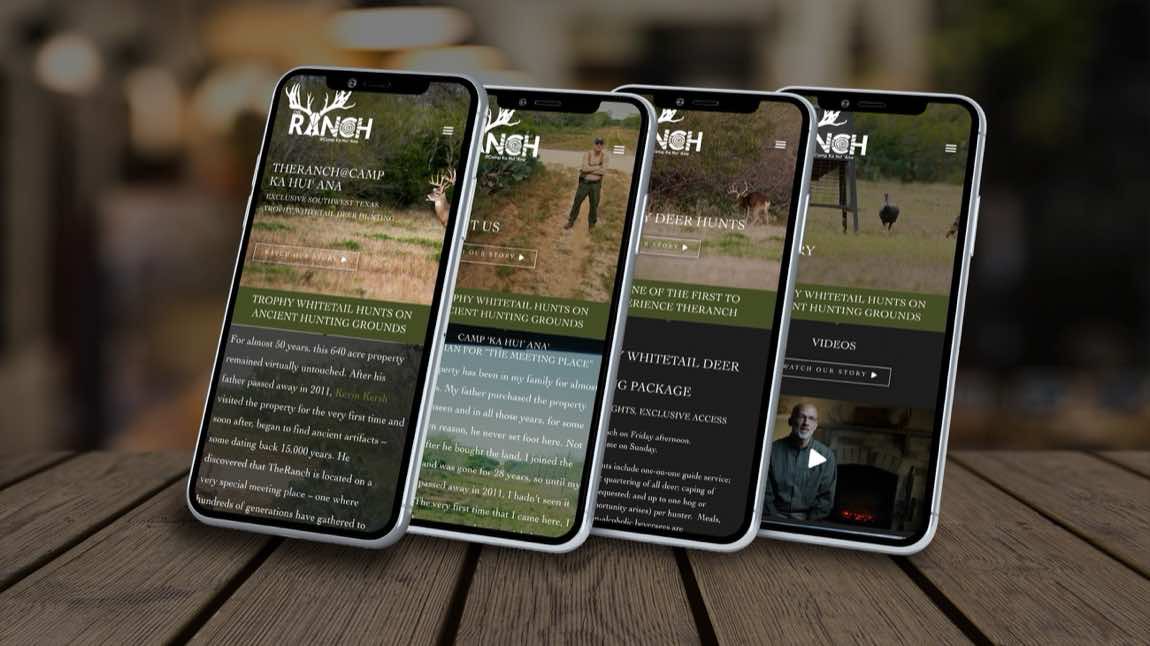
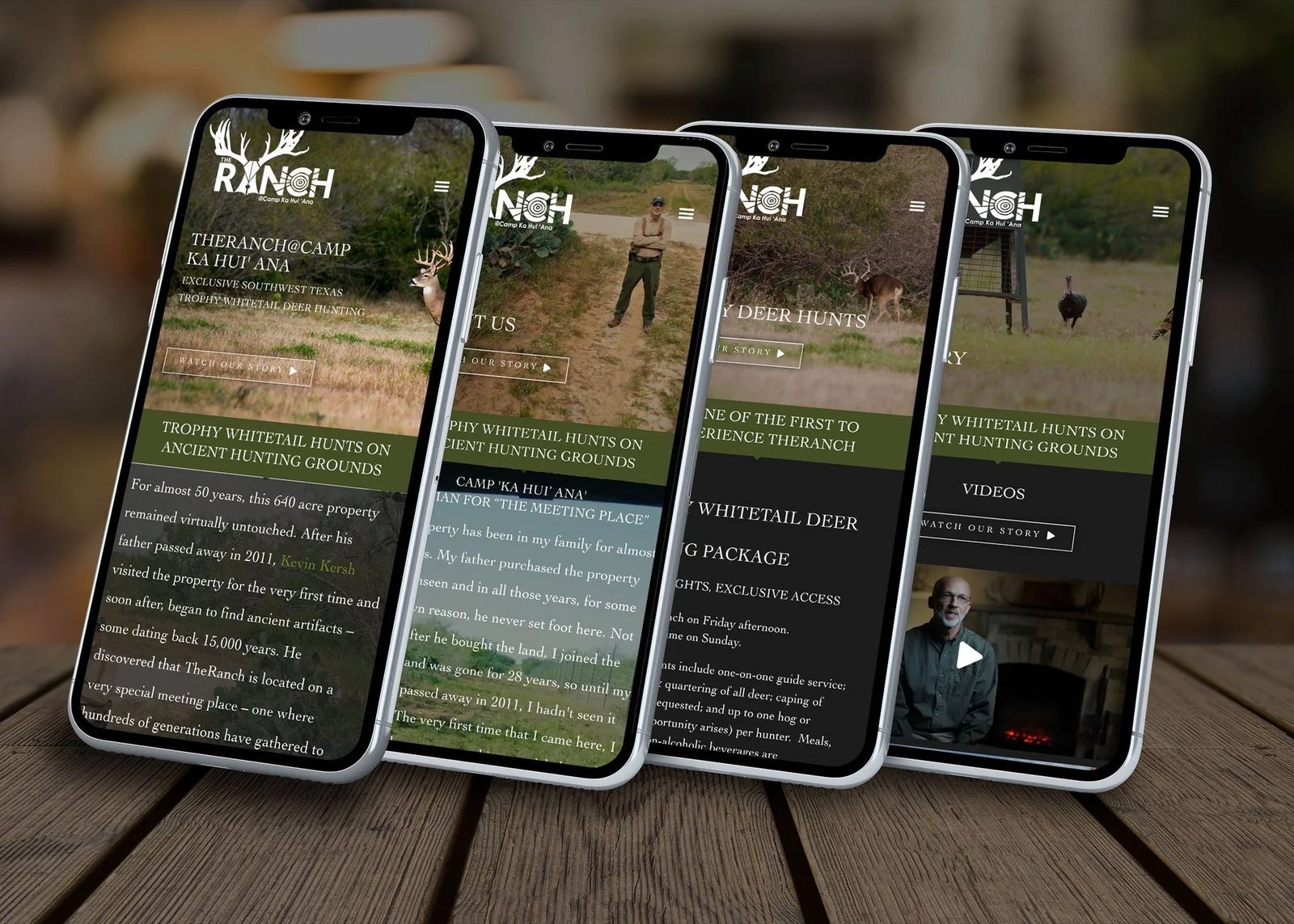
Enter360 created the identity, built the website, designed the pricing model, and set up the booking system so the business could take money from day one. The film and a full photographic record were produced on the property, because a place like this is sold on feeling long before it is sold on acreage.
The calendar was filled deliberately slowly. Only a handful of hunts were sold the first season, all at the top of the market, so that only a few people a year could say they had hunted there. Scarcity was part of the product. Email did the rest: lead magnets on the site traded something worth having for an address, and the list received the pieces that sold the next season, package sheets, stories from the property, photographs from the field. Three days and two nights, exclusive access to the land, one trophy buck, and no balance due if no animal was taken.

Winning a brutal search market
The long game was search. The site was built to rank from the ground up, then fed for years with stories, blog content, photography, and video, the slow work that wins in a market where the competition has a decade’s head start. The studio’s search background runs deep, back to building its own URL-rewriting technology before clean URLs were standard, and that experience is what made an organic win possible here. The site now draws more than 140,000 visitors a year.
Where it went
The Ranch’s premium trophy whitetail hunts, priced up to $16,500 for three days and two nights with exclusive access, a $3,500 fee to book and the trophy fee due only if a buck is taken, are booked two years in advance. The property has since expanded into executive and retreat offerings on the same brand foundation. A piece of land its owner nearly sold, with no name, no logo, and no hunting history behind it, now runs at capacity in the most competitive hunting market in the country.